The market for intelligent solid waste equipment is expanding, and compliance upgrades are generating a large number of upgrade orders.

According to industry monitoring reports, the domestic market size for intelligent waste sorting equipment is projected to reach 14.7 billion yuan in 2026. Environmental impact assessment compliance, renovation of existing sanitation facilities, and supporting facilities in newly built industrial parks are the three main sources of orders. The conversion of old open-air waste collection points and simple waste rooms into sealed underground stations has become a routine procurement project for local urban management and housing construction departments in the past two years.

Corresponding company strategy: Underground waste collection stations are Yinengda’s core product. With its advantages such as patented non-powered operation, low maintenance costs, strong sealing, and adaptability to Xinjiang’s climate, it has become the mainstream choice for the renovation of old waste collection points in Xinjiang.
Lower-tier markets, county and township markets, and the Xinjiang Production and Construction Corps market have become the core growth markets for sanitation renovation.

The nationwide “Zero Waste City” construction and rural revitalization and living environment improvement projects continue to penetrate deeper into rural areas, leading to a surge in demand for sanitation facility upgrades in townships, farms, old residential communities, farmers’ markets, and scenic areas. Enclosed underground waste stations, standardized waste sorting kiosks, and low-cost intelligent equipment have become the mainstream procurement categories.

Corresponding company strategy: Yinengda has cultivated the Xinjiang county and Xinjiang Production and Construction Corps market for many years. Its products are specifically optimized for corrosion prevention and sealing in Xinjiang’s windy, low-temperature, and arid climate, and have been implemented in numerous township, company, and community projects throughout Xinjiang, highlighting its advantages of local R&D, local production, and local service.

The sanitation equipment industry is recovering, with new energy and intelligent technologies becoming the two main growth drivers.

1. Industry Recovery: Domestic sanitation equipment sales increased by 11.5% year-on-year in 2025, and maintained a growth rate of 16.5% in the first half of 2026, indicating the industry has emerged from its downturn. New energy sanitation vehicles experienced explosive growth, with government procurement of new energy sanitation equipment exceeding 85% in 2026. Electrification has become a nationwide trend, with Xinjiang simultaneously promoting low-carbon upgrades for sanitation vehicles and equipment.

2. Widespread Adoption of Unmanned and Digitalization: L4-level unmanned cleaning equipment and intelligent sanitation dispatch platforms have been deployed on a large scale, with networked equipment and data-driven management becoming basic configurations. The global penetration rate of intelligent sanitation equipment has been increasing year by year, with the number of networked intelligent trash cans deployed in China exceeding 120,000 sets in 2026.

Corresponding Company Strategy: Yinengda’s intelligent trash cans are equipped with an IoT backend management system, enabling remote viewing of disposal data, equipment fault warnings, and collection scheduling. They are also equipped with underground equipment interfaces compatible with new energy collection vehicles, keeping pace with the industry’s intelligent and green transformation trends.

National policy direction: garbage classification shifts from front-end manual sorting to equipment-intelligent back-end processing

In 2026, the Ministry of Housing and Urban-Rural Development adjusted its national approach to waste sorting and management, relaxing the requirements for refined home-based waste disposal and shifting sorting work to AI-automated sorting lines in back-end plants. Waste treatment plants nationwide adopted fully automated sorting equipment using near-infrared recognition, magnetic separation, and air separation, achieving sorting efficiency more than ten times that of manual labor. Zero landfill of raw waste became a mandatory performance target for all regions.

Corresponding company strategy: Yinengda’s full-chain product matrix of front-end intelligent disposal equipment and back-end collection and transportation equipment perfectly matches the new industry policy logic. It forms a closed-loop solution from residential disposal, sealed storage, centralized collection and transportation, to final disposal, making it the preferred partner for integrated urban and rural sanitation transformation.

Branch office information iteration and optimization, and the full-domain service network upgrade.

In June 2026, the company completed the update of the contact information (phone number, email address, and business registration information) of its Turpan branch, improved the localized service network layout in the eastern Xinjiang region, and formed a localized service system with Urumqi as its headquarters, radiating to Turpan, Hami, Changji, and other prefectures and cities in northern Xinjiang, including pre-sales surveying, installation and construction, and after-sales maintenance. This shortened the project response time and reduced the project implementation costs in various prefectures and cities.

5

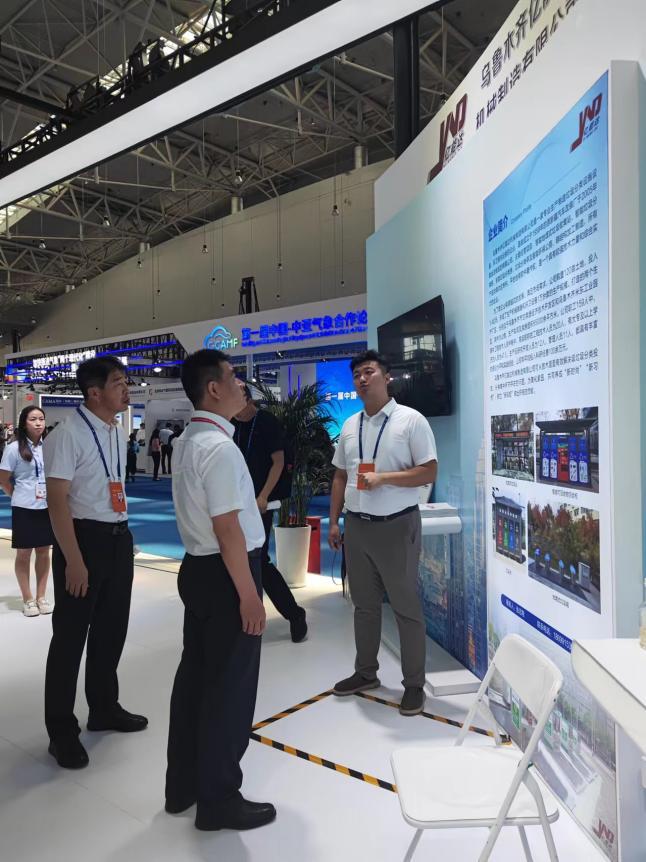
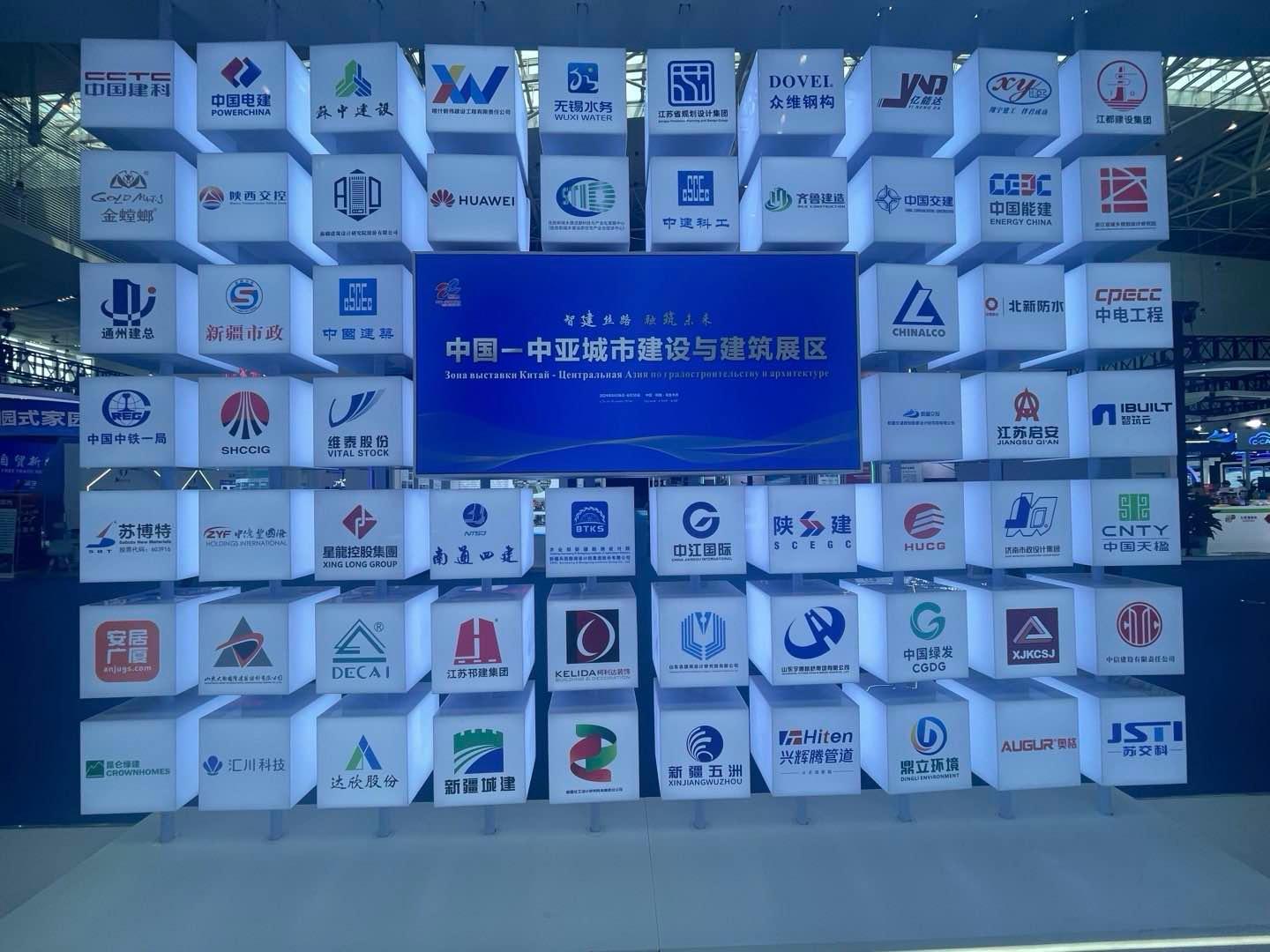
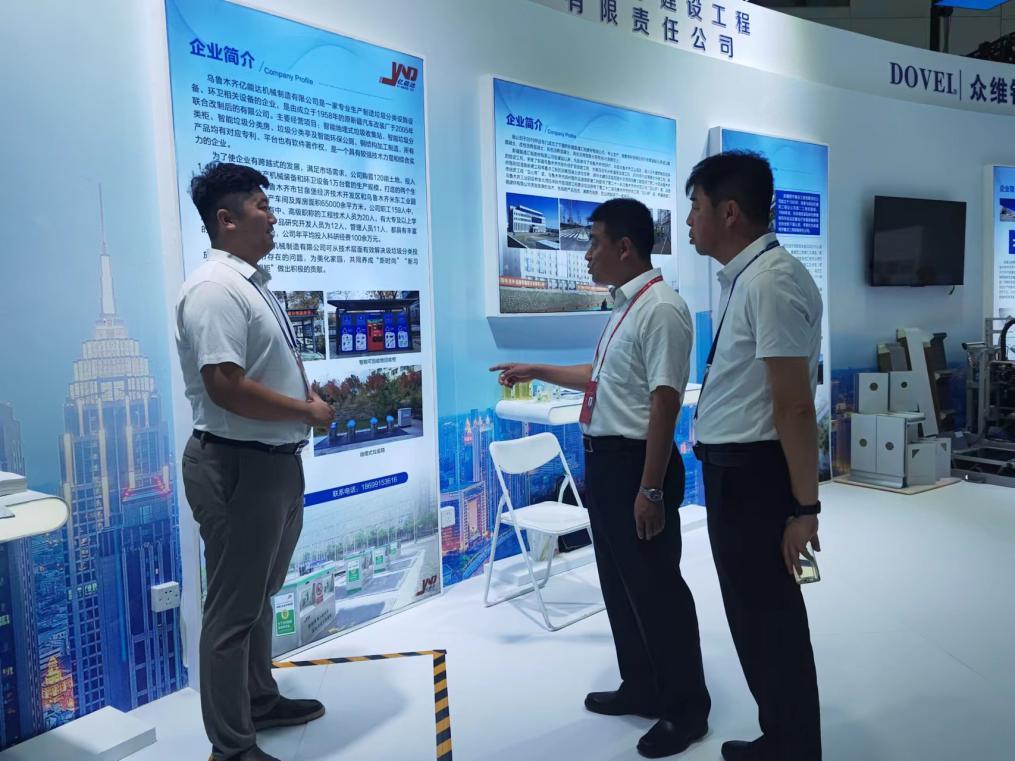
Xinjiang showcases its local sanitation manufacturing capabilities at the Asia-Europe International Energy Conservation and Environmental Protection Expo.

The company participated in the 3rd Xinjiang Asia-Europe International Energy Saving and Environmental Protection Expo with its intelligent garbage classification equipment and underground garbage collection system. It exchanged technical solutions with environmental protection enterprises inside and outside Xinjiang and local environmental sanitation authorities in industry forums. Relying on the “Belt and Road” location advantage, it opened up channels for technical exchanges and business cooperation in sanitation equipment inside and outside Xinjiang, and exported Xinjiang’s localized sanitation equipment technology that is highly adapted to the arid climate.

We continue to win environmental sanitation procurement bidding orders from many places across Xinjiang, and our market territory is steadily expanding.

From 2025 to 2026, the company won bids for numerous official procurement projects in various regions, including: the underground garbage bin procurement project (winning bid amount of 315,000 yuan), the garbage bin procurement project of the 78th Regiment of the Fourth Division (winning bid amount of 160,000 yuan), the sanitation equipment project for the demonstration village of Putaogou Street, the renovation of garbage sorting pavilions in Changji City, the underground garbage station of the Xuelianshan Campus of Xinjiang Medical University, and the construction of garbage sorting facilities in Shayibak District, among more than 100 other bidding projects. Its products cover Urumqi, Turpan, Changji, Ili, and various divisions and cities of the Xinjiang Production and Construction Corps, making it a core supplier for upgrading urban and rural garbage sorting infrastructure in Xinjiang.

Recognized as a national high-tech enterprise in 2025, it empowers local sanitation intelligent manufacturing with its core technologies.

In 2025, Yinengda successfully passed the national high-tech enterprise certification, becoming one of the few sanitation equipment manufacturers in Xinjiang with independent intellectual property rights for waste sorting equipment and a complete R&D and production chain. The company currently has four major product lines: five-category intelligent point-based waste bins, underground waste stations, intelligent environmentally friendly public toilets, and steel structure sanitation facilities. It has independently developed a QR code-based waste disposal system, a weighing and point-based system, and a back-end data management system. Residents can accumulate points by disposing of waste and redeem them for daily necessities. The integrated hardware and software solutions are adaptable to various scenarios including communities, towns, industrial parks, and scenic areas. Its products have been implemented in over a hundred communities and public projects throughout Xinjiang, including districts and counties of Urumqi, Yili, Tekes, Qinghe, Turpan, Changji, and divisions of the Xinjiang Production and Construction Corps.

1

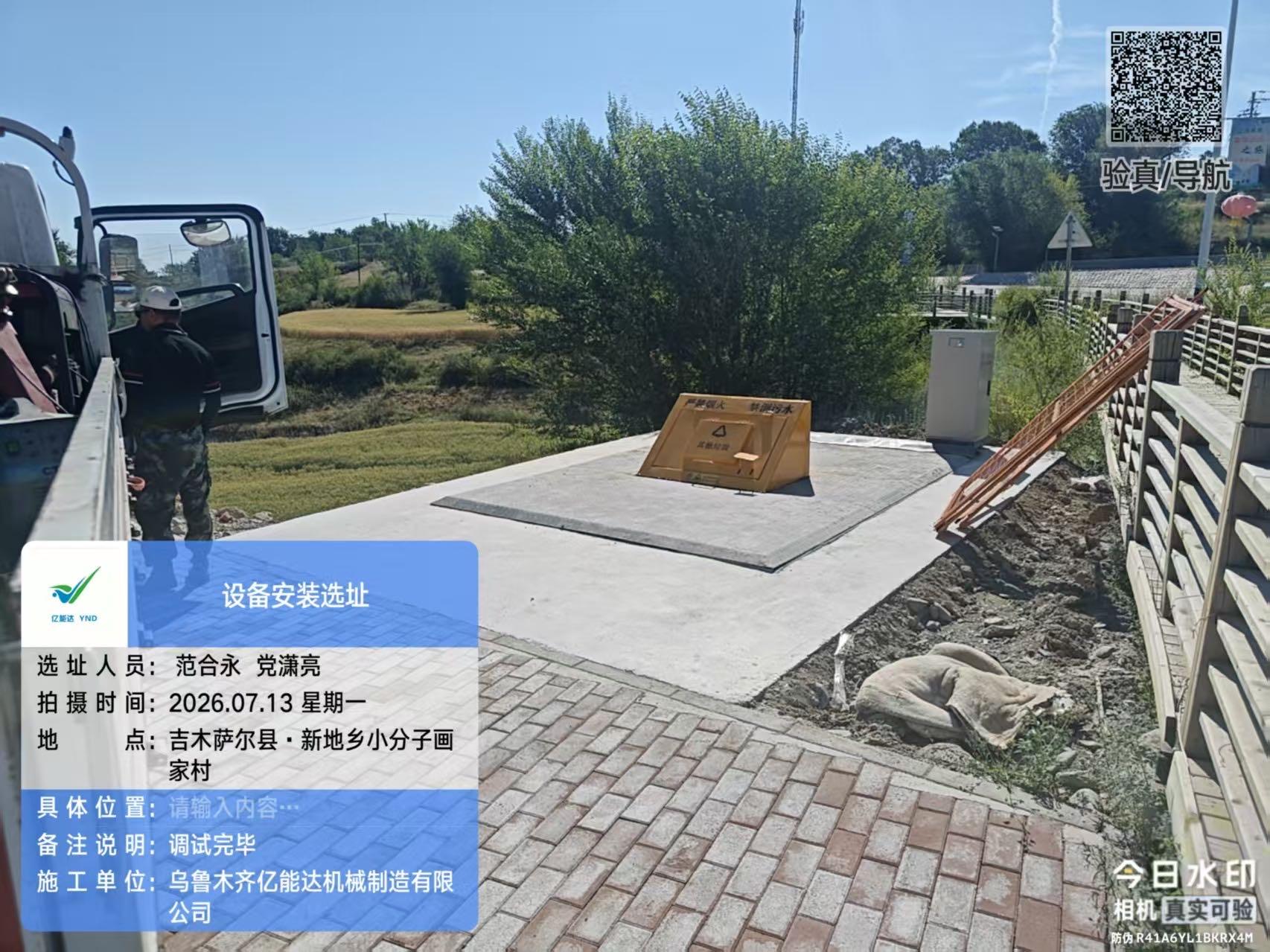
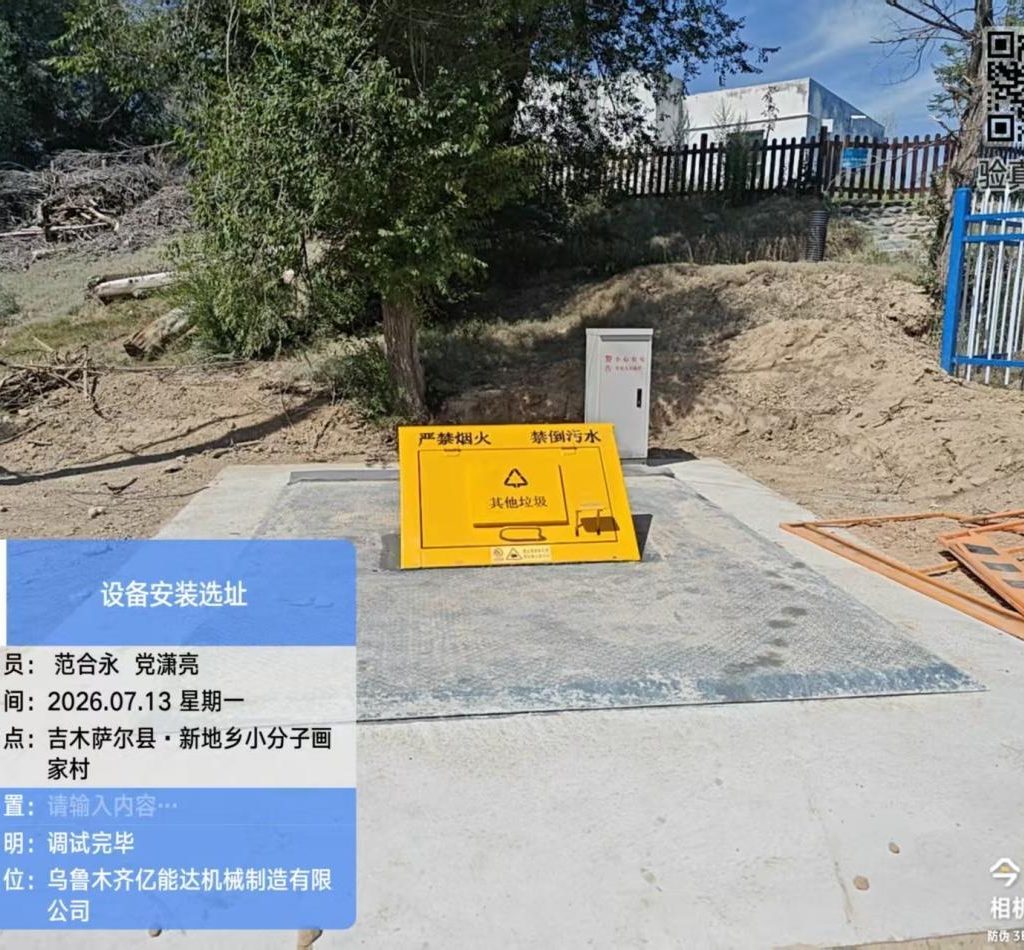
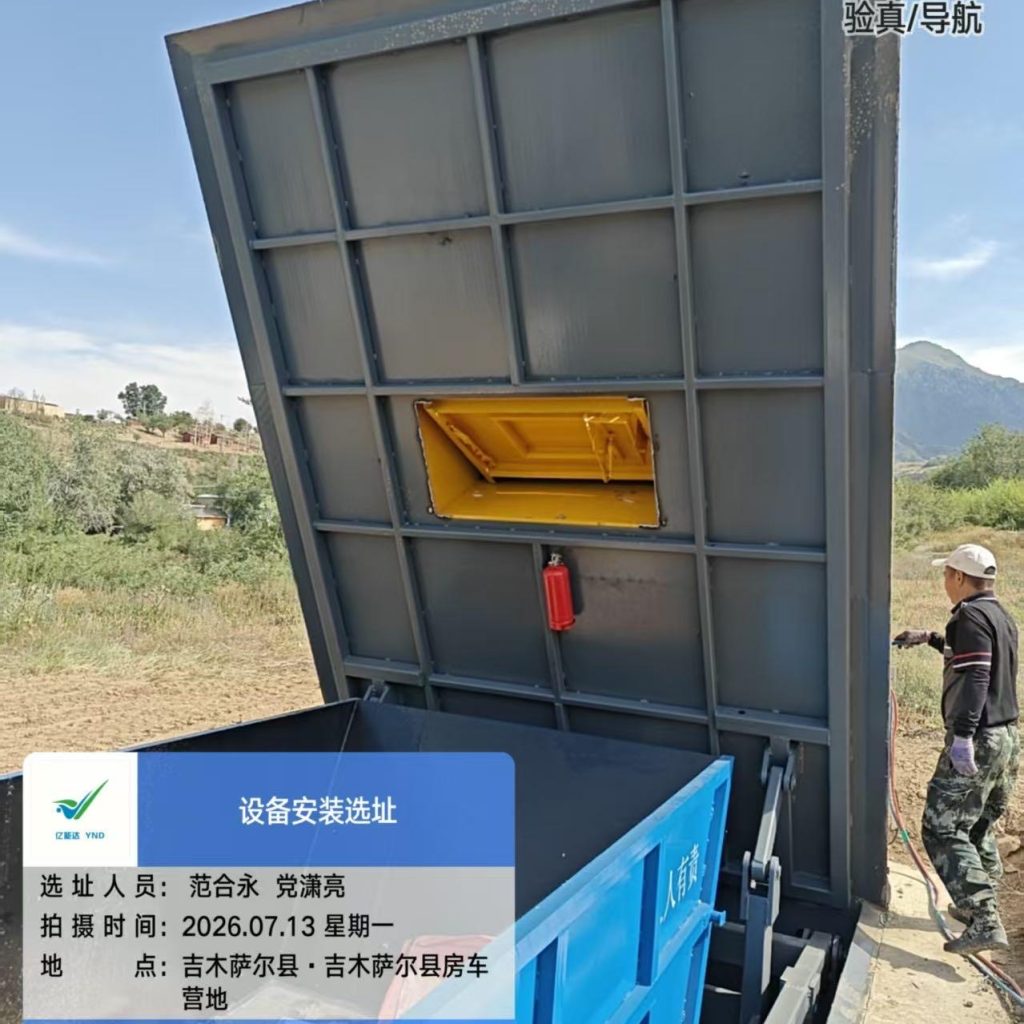
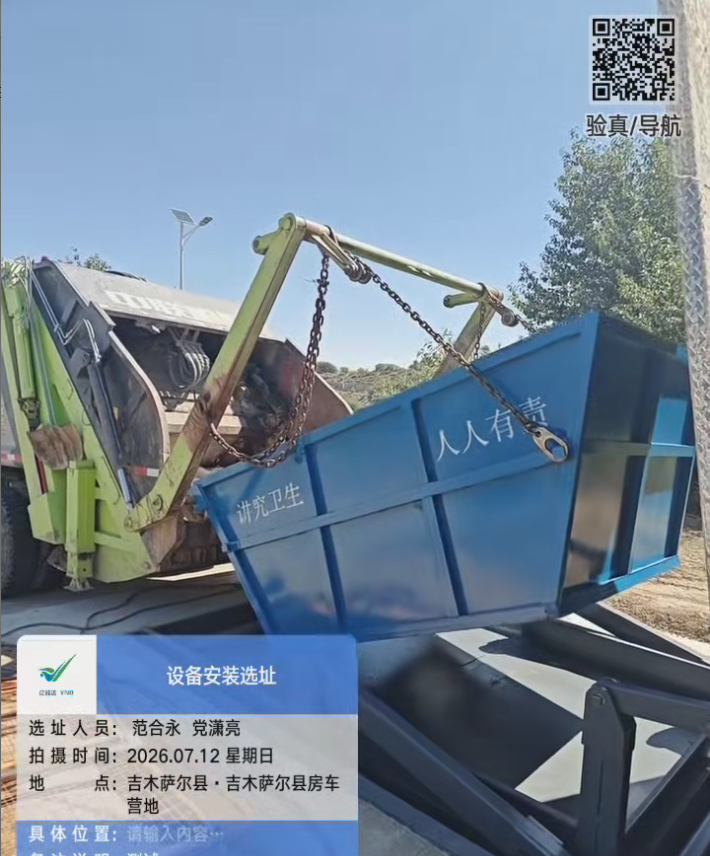
Jimsar County conducts on-site installation and testing of underground garbage bins, marking the practical implementation of an integrated sanitation and waste collection solution.

Recently, the company completed the batch installation and overall debugging of its self-developed underground intelligent garbage bins in Jimsar County. Simultaneously, it conducted joint operation tests with garbage collection boats and rear-loading garbage trucks to verify the stability of the equipment throughout the entire process of underground sealed storage, lifting and unloading, and vehicle docking and transportation.

Yinengda’s self-developed underground garbage bins possess patented technology that requires no electricity or power. They feature integrated sewage collection, odor sealing, and automatic fire suppression systems. Buried deep underground, they do not occupy public space on the surface, solving the pain points of open garbage dumping, mosquito breeding, and odor diffusion in residential areas, towns, and commercial districts. This on-site test completed comprehensive verification of equipment compatibility, transportation efficiency, and stability under extreme operating conditions. The mature solution can be replicated and promoted in batches to urban and rural sanitation renovation projects in various counties and cities of Xinjiang.

With the iterative updates to its legal entity and organizational structure, the company has entered a new stage of standardized development.

In March 2026, Urumqi Yinengda Machinery Manufacturing Co., Ltd. completed the change of its legal representative from Cheng Jun to Dang Wei, and simultaneously completed the filing and adjustment of its senior management team. Relying on its two major production plants in Midong Industrial Park and Ganquanbao Economic Development Zone, a 75,000㎡ production base, and 33 patents for sanitation equipment, the company further optimized its internal management system, production and delivery processes, and after-sales service structure, strengthening its operational capabilities as a leading local sanitation equipment enterprise in Xinjiang. As a vice-chairman unit of the Xinjiang Environmental Sanitation Association, the company continuously undertakes bidding projects for garbage classification infrastructure and sanitation engineering in various cities and prefectures throughout Xinjiang, laying a solid foundation for the delivery of sanitation projects across the region with its standardized management system.